


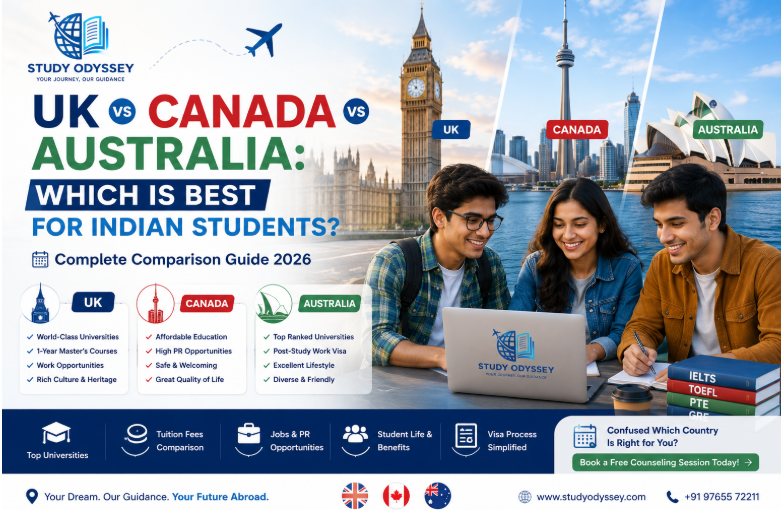
The dream of studying abroad is a powerful one, filled with visions of world-class education, new cultures, and incredible career opportunities. For many Indian students, the choice often narrows down to three English-speaking giants: the United Kingdom, Canada, and Australia. But this is where the real challenge begins. The big question on everyone’s mind is: UK vs Canada vs Australia: Which is Best for Indian Students? Each country offers a unique blend of academic excellence, lifestyle, and post-study prospects, making the decision feel overwhelming. This guide is here to break it all down, helping you compare these top destinations side-by-side so you can make an informed choice for your future.
Choosing a country is not just about picking a university; it’s about selecting a new home for the next few years of your life. It involves weighing tuition fees against living costs, understanding complex visa rules, and imagining yourself in a completely new cultural landscape. At Study Odyssey, we’ve guided countless students through this exact dilemma, and now we’re putting that expertise into this comprehensive comparison.
The United Kingdom: Tradition Meets Modernity
The UK has long been a beacon for higher education, boasting some of the world’s oldest and most prestigious universities. When you choose to study in UK, you are stepping into a legacy of academic excellence. The educational system is renowned for its quality, with a strong emphasis on research and critical thinking.
One of the biggest draws for Indian students is the duration of the courses. Master’s degrees are typically one year long, which means lower overall tuition fees and a quicker entry into the workforce compared to the two-year programs common elsewhere. The UK is also a cultural hub and a gateway to Europe, offering unparalleled travel opportunities.
- Top Universities: University of Oxford, University of Cambridge, Imperial College London, and the entire Russell Group.
- Popular Courses: Business and Management, Engineering, Law, Medicine, Computer Science.
- Tuition Fees (Approx.): £15,000 – £35,000 per year for undergraduate; £18,000 – £40,000 per year for postgraduate.
- Average Living Costs: £12,000 – £15,000 per year, depending on the city (London being the most expensive).
The reintroduction of the Graduate Route visa has been a game-changer, allowing international students to stay in the UK for two years (three for PhD graduates) to work after completing their degree. This provides a valuable opportunity to gain international work experience.
Canada: Welcoming, Diverse, and Opportunity-Rich
Canada has rapidly become one of the most sought-after destinations for Indian students, and for good reason. The country is known for its high quality of life, safe cities, and incredibly welcoming attitude towards immigrants. If you decide to study in Canada, you’ll find a multicultural environment where diversity is celebrated.
Canadian universities consistently rank among the best in the world, offering a wide range of programs with a focus on practical, hands-on learning through co-op programs. The real standout feature, however, is its clear pathway to permanent residency (PR). The Post-Graduation Work Permit (PGWP) allows students to work in Canada for up to three years after graduation, and this Canadian work experience is a significant advantage when applying for PR.
- Top Universities: University of Toronto, McGill University, University of British Columbia.
- Popular Courses: Information Technology, Business Analytics, Health Sciences, Engineering, Hospitality Management.
- Tuition Fees (Approx.): CAD 20,000 – CAD 40,000 per year for undergraduate; CAD 18,000 – CAD 35,000 per year for postgraduate.
- Average Living Costs: CAD 15,000 – CAD 20,000 per year.
While the winters can be harsh, the warm and inclusive nature of its society more than makes up for it. For students with long-term immigration goals, Canada presents one of the most straightforward and appealing options in the student journey of UK vs Canada vs Australia: Which is Best for Indian Students?
Australia: Sun, Sand, and Stellar Education
For those who dream of studying in a country with a relaxed lifestyle, stunning landscapes, and vibrant cities, Australia is the perfect choice. But it’s not all about the beaches; the decision to study in Australia is also a smart academic move. Australian universities are globally recognized, especially in fields like engineering, environmental science, and business.
The Australian education system emphasizes research and innovation, providing students with access to state-of-the-art facilities. Cities like Melbourne, Sydney, and Brisbane are consistently ranked as some of the most livable in the world, offering a great student experience. The Temporary Graduate visa (subclass 485) allows eligible graduates to stay and work in Australia for a period, providing a great platform to launch a global career.
- Top Universities: The Australian National University, The University of Melbourne, The University of Sydney (The Group of Eight universities).
- Popular Courses: IT, Accounting, Nursing, Architecture, MBA.
- Tuition Fees (Approx.): AUD 25,000 – AUD 45,000 per year for undergraduate; AUD 28,000 – AUD 50,000 per year for postgraduate.
- Average Living Costs: AUD 21,000 – AUD 25,000 per year.
Australia’s strong economy and demand for skilled professionals in various sectors offer promising career prospects for graduates. The country’s focus on student welfare and support services makes the transition smoother for international students. Ready to take the next step in your study abroad journey? Explore the possibilities with Study Odysseyand let us guide you.
Key Factors to Consider: A Side-by-Side Breakdown
Choosing your destination requires a careful look at the factors that matter most to you. The question of UK vs Canada vs Australia: Which is Best for Indian Students? depends heavily on your personal priorities, career aspirations, and financial situation.
University Rankings and Quality of Education
All three countries offer world-class education. The UK is home to some of the oldest and highest-ranked institutions globally (Oxbridge, LSE). Canada also has several universities in the global top 100, known for strong research and co-op programs. Australia’s Group of Eight universities are powerhouses in research and are highly respected worldwide. Your choice might depend on the specific ranking and reputation of universities for your chosen field of study.
Cost of Studying and Living
This is often the most significant factor. Generally, the UK can be expensive, especially London, but one-year Master’s programs can reduce the overall cost. Canada often presents a more affordable middle ground for both tuition and living. Australia tends to have higher tuition fees and living costs, partly due to its high minimum wage (which benefits students working part-time). It’s crucial to look beyond tuition fees and consider all the hidden costs of studying abroad that students often ignore.
Post-Study Work Opportunities and Immigration Pathways
Your long-term goals are critical. Canada leads the pack with its straightforward PGWP and points-based Express Entry system for PR. The UK’s Graduate Route offers two years of post-study work, which is excellent for gaining experience but doesn’t directly lead to settlement. Australia’s Temporary Graduate visa offers 2-4 years of work rights, and while PR is possible, the process can be more competitive and subject to changing skill-shortage lists.
Scholarships and Financial Aid
All three countries offer a variety of scholarships for international students, but they are highly competitive. The UK has prestigious awards like the Chevening and Commonwealth scholarships. Many Canadian and Australian universities offer entrance scholarships based on academic merit. A deep dive into the reality of scholarships for studying abroad can help set realistic expectations.
Making Your Final Decision
So, we come back to the core question one last time: when it comes to the UK vs Canada vs Australia: Which is Best for Indian Students? There is no single correct answer. The best country is the one that aligns with your unique profile.
- Choose the UK if: You want a prestigious degree from a world-renowned university, prefer shorter course durations, and want easy access to Europe.
- Choose Canada if: Your priority is a clear pathway to permanent residency, you value a multicultural and welcoming society, and you are interested in co-op programs.
- Choose Australia if: You are seeking a high-quality education in a country with a fantastic lifestyle, great weather, and strong research opportunities.
This decision is one of the most important you’ll ever make. Feeling a bit lost in the details? Don’t worry, that’s what we are here for. The team at Study Odyssey is dedicated to providing personalized guidance to help you navigate this complex choice. For tailored advice, feel free to get in touch with our expert counselors via our Contact Us page.
Frequently Asked Questions (FAQs)
Q: Which country is the cheapest for Indian students among the UK, Canada, and Australia?
A: Generally, Canada tends to be the most budget-friendly option when you balance tuition fees and living costs. While UK Master’s programs are only one year, the high cost of living can offset those savings. Australia is typically the most expensive of the three in terms of both tuition and living expenses.
Q: Which country offers the easiest path to Permanent Residency (PR)?
A: Canada is widely regarded as having the most straightforward and transparent pathway to PR for international students. The Post-Graduation Work Permit (PGWP) and the points-based Express Entry system are designed to help skilled graduates transition to permanent residents.
Q: Can I work part-time while studying in these countries?
A: Yes, all three countries allow international students to work part-time during their studies and full-time during scheduled breaks. Typically, you can work up to 20 hours per week during the academic semester. This is a great way to earn money and gain local work experience.
Q: Do I need to take the IELTS for all three countries?
A: Yes, as a non-native English speaker, you will almost certainly need to provide proof of English proficiency for university admission and visa applications for all three countries. The IELTS is the most commonly accepted test, but some universities may also accept TOEFL, PTE Academic, or Duolingo.
Q: How does the weather compare in the three countries?
A: The weather varies drastically. The UK has a temperate climate with mild summers and cool, damp winters. Canada is known for its cold, snowy winters, especially in the central and eastern parts, though it has warm summers. Australia is famous for its warm, sunny climate, with hot summers and mild winters, making it ideal for those who love the outdoors.
